
- ଓଡିଶା ସରକାର Government of Odisha |ଓଡ଼ିଆ ଭାଷା, ସାହିତ୍ୟ ଓ ସଂସ୍କୃତି ବିଭ Depart

- CALL SUPPORT :
- 0674 2503956
- E-Mail :
- principalusm@gmail.com

Department of Dance
| * Department of Vocal Music (Odissi Vocal & Hindustan Vocal). | * Department of Instrumental Music (Odishi Pakhwaj , Tabla, Flute, Hindustani Violin, & Sitar) |
| * Department of Dance (Odissi Dance & Chhow Dance). | * Department of Drama (Stage Craft, Acting & Direction). |
* Chhow Dance Of Mayurbhanj
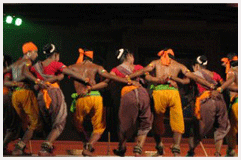
Mayurbhanj Chhau dance is prevalent in the south-eastern part of Odisha. Adjacent to the state of Manyurbhanj, lie the states of Seraikala and Purulia, today part of the States of Jharkhand and Bengal respectively. Within the region there is a large variety of tribes who, in turn, share many common features with the tribes of Madhya Pradesh and Bihar. These tribes range from the Munda group to the Austric and the India, even if anthropologists differ on the classification.
Agriculturally, many of the tribes of the region are shift cultivators and some are tool agriculturalists. Many propitiation rites are common to this tribal group of people, and the agriculturists, in particular, have rites which revolve around the installation of a pole as a symbol of fertility. The Mayurbhanj Chhow dance is the traditional legacy of Odisha.
Utkal Sangeet Mahavidyalaya has started this department to propagate and groom future dancers for the state.
* Odissi Dance
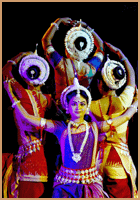
Indian classical dances today embody a sense of ecstasy and poetry. Classical dances portray aesthetic geometric patterns. This kind of perfection is derived through expressiveness of the dancer and of firmly controlled practice. These Indian classical dances are the products of lingering research by eminent maestros and performers. They drew their basic elements from the already existing dance form and surrounding environment. They created a different era in the art where the communication was only enjoyment that too of the ethereal world. The dance, that stands as it is today, imbibes its characteristics from literature, traditions, religious ceremonies and other most common activities of human and animal life. Thus the Indian classical dance can be defined as “Visual sculptural poetry enacted to enliven man’s innermost latent spiritual emotions”. This kind of emotional extravaganza was analyzed by the great rhetoricians of ancient India as ‘Rasa’. This word elevates Indian dancing to a spiritual level from the normal recreational level. Thus we can find a keen similarity of this exquisite Indian classical dancing with Hatha Yoga of sages.
Odissi dance wasversatileas an Indian Classical dance in the year 1972. After that it has crossed international borders.